
Tag: Narcissism

Narcissism and Vicarious, Simulated Life

Vicarious experience is a powerful and often underappreciated mechanism by which humans learn, adapt, and emotionally fulfill themselves. Whether through games, crime fascination, activism, affairs, or even narcissism, these simulated experiences offer a risk-free way to prepare for life’s uncertainties and complexities.
Rather than viewing vicarious experience as mere fantasy or avoidance, recognizing its role in mental simulation and emotional preparation helps us understand human behavior more deeply. Embracing these experiences mindfully can enhance resilience, empathy, and personal growth in an unpredictable world. Narcissism and Vicarious, Simulated Life

Read More »

Narcissism: Heredity, Overt-Covert Genders, Confabulation, and Elephants

Understanding narcissism and animal behavior requires a critical mindset that separates ideology from evidence. Narcissistic Personality Disorder is a nuanced condition influenced more by environment than heredity, with gender differences in how it manifests. Similarly, elephant behavior defies simplistic, idealized portrayals, revealing a complex social structure rife with conflict.
For both psychology and ethology, acknowledging complexity and avoiding oversimplification leads to better knowledge and more effective interventions, whether in clinical settings or wildlife conservation. Narcissism: Heredity, Overt-Covert Genders, Confabulation, and Elephants

Read More »

Epstein: Depravity as Rebellion, Psychopathic Liberty, Defiant Freedom

Understanding psychopathy and narcissism through the lenses of deristic thinking, control, and freedom provides valuable insights into why these individuals behave as they do. Their rejection of societal norms is not mere rebellion but a complex psychological strategy to cope with deep anxiety and a perceived lack of liberty. Recognizing these dynamics helps in developing better psychological frameworks and interventions that address the root causes of their behaviors rather than simply condemning their actions. Epstein: Depravity as Rebellion, Psychopathic Liberty, Defiant Freedom

Read More »

Why Narcissist Feels Entitled to Magical, Enchanted Life

The narcissist’s life is a continuous interplay of enchantment and disenchantment, driven by an insatiable need for magic and a fragile grip on reality. Their enchanted worldview offers temporary safety and elation but is inherently unstable, vulnerable to the relentless encroachment of disenchantment. Understanding these dynamics sheds light on the challenges of engaging with narcissistic individuals and highlights the profound psychological defenses underlying their behavior. Why Narcissist Feels Entitled to Magical, Enchanted Life

Read More »

YOU as Delirious Narcissist’s Self-state (Pseudo-psychosis)

Understanding the anticipatory nature of self-states and the role of constructs and introjects allows for a deeper grasp of personality disorders such as narcissism and borderline personality disorder. These insights emphasize how fragile and permeable the boundaries between self and environment can be, leading to profound psychological difficulties.
Advances in this field open pathways for more effective therapeutic approaches and provide hope for individuals struggling with identity disruptions and interpersonal dysfunction. The upcoming seminar promises to deepen this understanding and foster community among professionals and those affected by these disorders. YOU as Delirious Narcissist’s Self-state (Pseudo-psychosis)

Read More »

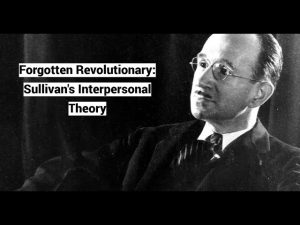
Forgotten Revolutionary: Sullivan’s Interpersonal Theory

Harry Stack Sullivan’s interpersonal theory remains a powerful framework for understanding human psychology as an inherently social phenomenon. His revolutionary ideas challenge the isolated individual model and highlight the vital role of relationships in shaping our minds and lives.
By redefining mental illness as difficulties in living and emphasizing the therapeutic potential of human connection, Sullivan offers a hopeful and pragmatic approach to mental health—one that continues to inspire clinicians and theorists today. Forgotten Revolutionary: Sullivan’s Interpersonal Theory

Read More »

Narcissism: Social Malaise Affects Individuals (with Psychologist and Biologist Marcia Maia)

Healthy narcissism is a foundational element of mental health—regulating self-worth, identity, and functioning—while the speaker argued that reality testing should be added as a core criterion to distinguish health from shared or delusional fantasies. The discussion warned that political correctness, the glamorization/denial of mental illness, and social media’s business model encourage addictive shared fantasies and hive minds that amplify envy, anger, and exclusion, eroding institutions and interpersonal belonging. The guest argued we are amid a major narrative transition (from reality-based to fantasy-based social organization) that is fragmenting society, increasing atomization and risk, and may be effectively irreversible once fully entrenched. Narcissism: Social Malaise Affects Individuals (with Psychologist and Biologist Marcia Maia)

Read More »
Loner Narcissist

Narcissist=Insane? You, Envy, Withdrawal, Loner Narcissist

The complex relationship between narcissism and schizoid personality disorder reveals how deeply intertwined withdrawal, envy, and self-fragmentation are in human psychology. Recognizing these links allows for a more compassionate understanding of these challenging personality structures. As society continues to evolve, awareness and informed approaches are crucial to mitigate the rising mental health crisis rooted in alienation and narcissistic pathology. Narcissist=Insane? You, Envy, Withdrawal, Loner Narcissist

Read More »

Narcissist’s Seductive Hyperreality: Feminine Sign-value of False Self (Baudrillard)

Lecturer applies Baudrillard’s spectacle theory to pathological narcissism, arguing that in postmodern hyper-simulation identities are performative and constructed from the sign-value of possessions and curated images. Narcissism acts as a defensive, preemptive objectification in which the false self replaces the authentic self, broadcasting superiority and seducing others into a fabricated reality. Unlike psychopathy’s direct destruction of external reality, narcissism subverts it through mimicry, seduction, and the reproduction of simulations—phenomena amplified by social media and consumer culture. Narcissist’s Seductive Hyperreality: Feminine Sign-value of False Self (Baudrillard)

Read More »