

Tag: Power Play

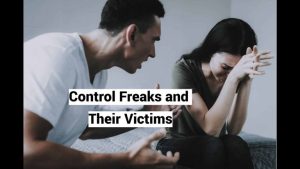
Control Freaks and Their Victims

Sam Vaknin distinguishes control from manipulation, power plays, and sadomasochism, arguing that control focuses on securing people as sources of outcomes and is largely unconscious. He outlines controller motivations—narcissistic grandiosity and separation/abandonment insecurity—and techniques such as withholding information, intimidation, disorientation (e.g., gaslighting), and expectation-broadcasting. He also explains why some people collude with controllers—seeking a secure base, embracing a victim identity, or validating internalized self-derogation—and describes collusive tactics like ostentatious helplessness, bottom-up control, and inducing unpredictability to provoke micromanagement. Control Freaks and Their Victims


Read More »

Narcissist, Psychopath: My Way or Highway, Eff You, In Your Face Factor

The speaker distinguishes independence (healthy ego and boundary maintenance with cooperative engagement) from defiance (exclusionary, antagonistic withdrawal), and maps a spectrum of reactant defiance from ostentatious eccentricity through nonconformity and consummacious rejection of authority to active rebelliousness and crime. 2) Narcissists and psychopaths use defiance—driven by traits like dissociality and antagonism—as a pride-infused, anxiolytic strategy to signal superiority and maintain fragile self-concepts, often frustrating others and treating people as disposable investments. 3) These defensive, disinhibitory strategies are ultimately self-defeating: reality breaches their defenses, leading to collapse, social isolation, substance use, emotional dysregulation, and sometimes suicide, leaving no sustainable legacy. Narcissist, Psychopath: My Way or Highway, Eff You, In Your Face Factor

Read More »

Cheating, Triangulation in Sick Relationships: Power Play, Revenge, Entitlement

The video discussed cheating and triangulation in abusive and narcissistic relationships, highlighting how these behaviors serve as tools for power play, revenge, and emotional regulation rather than genuine infidelity or pursuit of new relationships. It explored the motivations behind cheating in obsessive, mutually harmful couples—such as restoring power balance, self-harm, and reaffirming negative self-images—and contrasted them with narcissists’ reasons, including seeking control, novelty, and affirming entitlement. The discussion emphasized the destructive cycle these behaviors perpetuate, the instrumentalization of third parties, and the difficulty in breaking free due to trauma bonding and complex emotional dynamics. Cheating, Triangulation in Sick Relationships: Power Play, Revenge, Entitlement

Read More »

Cheating, Triangulation in Sick Relationships: Power Play, Revenge, Entitlement

This video explored the dynamics of cheating and triangulation in toxic, obsessive relationships, highlighting how these behaviors serve as tools for power plays, revenge, and emotional regulation rather than true romantic or sexual pursuits. It examined how such actions reinforce dysfunctional bonds, confirm internalized negative self-views, and often follow phases of extreme loyalty and trauma-induced behavior. Additionally, the discussion covered narcissistic motivations for cheating, including entitlement, control, boredom, and fear of intimacy, as well as the risks and consequences of using third parties in triangulation. Cheating, Triangulation in Sick Relationships: Power Play, Revenge, Entitlement

Read More »